
The Jungle Train
Notes on presence and freedom

I have just got back from an adventure.
We’d been planning this trip for a while – a proper adventure across Malaysia, west coast to east. No laptop. Just movement and noticing and trying to connect to this place a bit more.
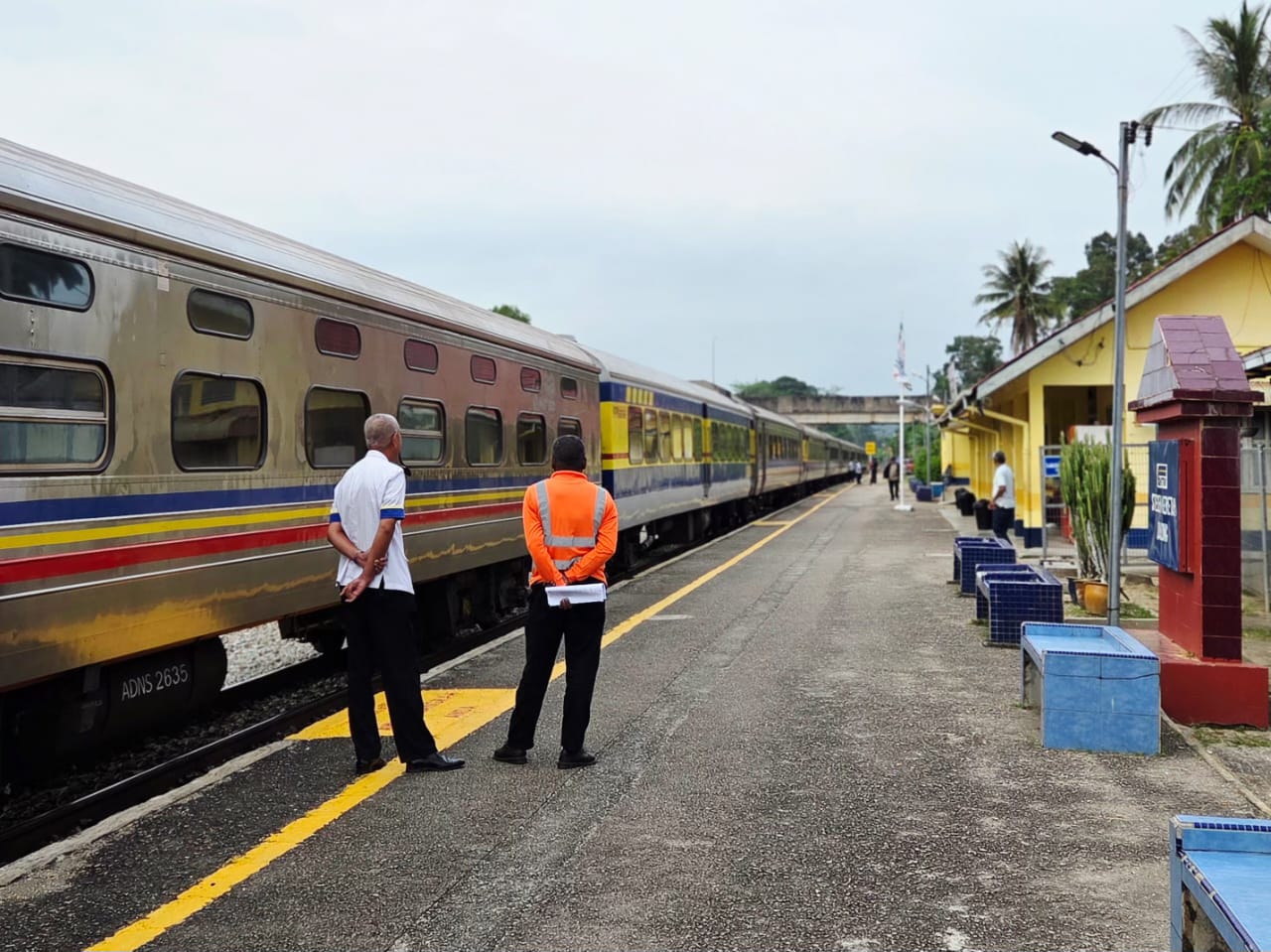
At 8.00pm, with rucksacks and bottles of water, we took a taxi to Sentral Train Station in Kuala Lumpur - ten minutes from our apartment. We stopped for Chinese tea and snacks and then took a 2.5-hour train to Gemmas. This bit felt very familiar and ordinary. Which is nice in itself. The train looked like trains I’m used to. It was dark outside, so mostly I saw city lights and my own reflection in the window. The train was full. People were tired, resting their heads or eating lots of snacks - occasionally I could smell chicken, noodles, or spicy curry. It was quiet. People got on and off at different stops.
At Gemas we waited forty-five minutes for the overnight train. The Jungle Train – a sleeper service that runs along an old colonial railway line. Diesel, so very slow. Lined with bunk beds and green curtains the full length of each carriage.
Because of my adventure, I wanted to know more about the story of this train. It was built in the 19th and early 20th centuries – originally for extraction and capitalism not development. The British used it to move rubber and tin from the interior of Malaya to the ports on the coast. I can’t help but think about what it would have been like to construct a railway line through jungle. The heat. The Tigers & Elephants. The physicality. The dark. The rain. Who were the people who built this?
I have read that many of the labour force of the railways were from India, and specifically South Indian Tamils. The story of Tamil workers on the railways over the 60-70 years is painful. Although I don’t know the story of my history - this is the period of time that ancestors of mine were moving from the Tamil area to Malaysia. Brutality and death at the hands of both the British and the Japanese is the story of the people who built the railways and there is little I can find in terms of recognition of this contribution. What I loved listening in this podcast about The History of Indian Labourers in the Malayan Railways was the connection to temples and spirituality.
The purpose of the train has changed over time. Becoming a lifeline for the communities along the route – people travelling for work, for school, for family. It connects remote villages to the rest of the country. And it’s become something else too: a slow, scenic journey that tourists take to see a part of Malaysia that’s otherwise hard to reach. A line built for extraction, now for connection and community. What a story.
By the time we boarded it was midnight. The train was full. Lots of people already asleep, but the lights stayed on – I think they stayed on all night. We walked the full length of the carriage to get to our bunks right at the end. I was so tired, and I knew I wouldn’t see much out the window in the dark, so I climbed straight onto my bunk and fell asleep.
I was amazed at how much sleep I actually got. It is noisy. You can hear metal screech on metal, feel the vibrations, and the carriage door would continually open and close as people moved about. For some reason I was ok with it all.
When I woke up, all I could see was jungle.
Green. Dense, layered, moving past the window at this slow pace. And I lay there watching for hours. I didn’t read. I didn’t look at my phone. I just watched. We still had about five hours to go in daylight, and I didn’t need anything else to do.
Eventually we found the breakfast car and I got a teh tarik and brought it back to my bunk. It was cold on the train – the air con was fierce – so the hot cup in my hands felt good. And I just kept watching.
We got off at Tanah Merah. A place to go back to, I think, and explore. Then an hour’s drive to the coast, and a forty-minute boat to the Perhentian Islands (By far the bumpiest bit of the whole trip). We stayed on Kecil Island for four days. Swimming, walking, talking, playing cards, reading, eating good food. It was wonderful.
I loved every minute of getting there. I loved travelling from one coast to another, seeing all the people on those full trains, all those families moving through the country. And then I loved the floating feeling of being on an island with nowhere else to be.
Freedom
Since I’ve been here in Malaysia, I’ve been noticing something about time. About how my family here relates to it differently than I do.
We went out for coffee and hot cross buns at the weekend – it was Easter, we were introducing them to this tradition. When we were at the cafe they reflected that they never do it - just go out for coffee. I don’t hear them talk about planning holidays the way I do. Travel, adventure, different experiences – that’s a big part of how I’ve structured my life. It’s part of how I think about freedom.
My family, here in Malaysia, talk a lot about purpose. About how they don’t really know the difference between when they’re working and when they’re not, because their work is their life. And although I’ve said that many times about my own work, it doesn’t seem the same.
There’s a different sense of flow here. A different sense of priority. Rest looks different. Time looks different.
I’ve been living in quite a structured on/off way. Work time, rest time. Time I can account for and time I’ve earned. But here, I’m living much more in flow. My days aren’t structured around 9-to-5 or a school day. They’re structured around how I feel, what’s needed, what wants to happen. Some days I achieve more by doing less. And it’s coming quite naturally.
There’s privilege in that – I know that. I don’t work a job where I have to be somewhere at a set time in front of people every day, the way my family does. They teach in schools. They have rigid schedules, fixed hours, no flexibility.
And yet they feel free.
That’s what I keep coming back to. They feel free. And I’m wondering if that’s to do with acceptance. With being present to the time they have, rather than waiting for the time they don’t.
Presence
I work with Liberatory Structures in Facilitation. I teach a practice – SHOOP® – that’s about finding freedom in your nervous system, in the sensations in your body. I run workshops that support people to experience change differently, to do things differently, to unlock something that’s been held tight.
Freedom comes up in my work all the time.
And yet here I am, realising I’ve been living inside a binary. On time and off time. Constraint and release. Work and rest. Even though I hate to admit it - I think I was.
What if freedom isn’t about having unstructured time? What if it’s not about earning a break or escaping the schedule?
What if it’s about being present in the time you actually have – whether that’s structured or not?
Lying on that bunk watching the jungle go past for five hours without needing anything else to do – It is unlike me. I wasn’t “off.” I wasn’t resting in the way I usually think about rest. I was just there. Completely there. And it felt like the freest I’ve been in a long time.
I’m noticing it’s still with me. That quality of attention. That willingness to just be in what’s happening without needing it to be different.
I know this. I teach this. And yet there I was, surprised by my own capacity to just watch out a window.
Freedom might be more ordinary than I thought. More about presence than permission.
I think this matters. Not just for me, but for all of us.
Because when you’re present to what’s actually happening – when you’re not measuring your time against someone else’s idea of productivity, when you’re not waiting for permission to rest – you start to see the world differently.
You don’t see people as problems to fix or threats to contain. You see humans. You see contribution, purpose, community, place. You see the unknown not as something to control or destroy, but as something you can meet with curiosity.
And right now, that feels urgent.
There’s war. There are people in power turning to oppressive systems because they want control, because they’re scared of what they can’t contain. Freedom feels like a luxury. Or worse, like something dangerous that needs to be managed.
But freedom isn’t about having no limits. It’s not about being boundary-less or unaccountable. It’s about being able to meet what’s here – including each other, including discomfort, including the unknown – without needing to dominate it.
It lives in the being with. In the ability to come together. In connection, not containment.
That’s what I see in my family, who feel free even within rigid schedules, because they’re living in relation to something bigger than themselves.
Maybe the answer is this: that capacity – to be present, to connect, to stay open – is what we actually need to build different ways of being together. Not as a soft, apolitical thing, but as a radical alternative to systems built on control and containment.
So if you are looking for what to do -
Resource yourself, nourish yourself - build your capacity
Create ways of being together
It’s radical.